Explore regions

PHSSR collaborates with individuals, organisations, and networks to deepen its regional work and understanding. These regional perspectives contribute to the PHSSR’s overall findings while also delivering focused analyses and regionally-tailored recommendations. Read on for more information about:

  • The EU Expert Advisory Group 
  • CAPRI
  • CEEBA Health Policy Network

EU Expert Advisory Group

Recognising the increasingly important role that the EU is playing in supporting Member State health systems, an EU Expert Advisory Group has been convened to make high-impact health policy recommendations to EU institutions on critical topics that will help to strengthen health system sustainability and resilience across the region.

Investing in health for a competitive, secure, and resilient Europe: A strategic call to action | May 2025

  • Members of the EU Expert Advisory Group came together in 2024 to explore ways to strengthen economic foundations for health systems in the region, with a resulting policy report published in May 2025. European health systems are at a pivotal moment, and financial sustainability is critical to their resilience in the face of current systemic challenges. Adopting a comprehensive strategy to health funding will ensure Europe can continue to provide essential healthcare services, implement innovation and increase economic growth for forward-looking health systems.

A stitch in time: Early intervention to tackle Europe’s NCD crisis | November 2023

  • Members of the EU Expert Advisory Group came together in 2023 to develop this inaugural report, containing policy recommendations to improve prevention and early detection of NCDs in Europe. It’s an urgent task as NCDs are the leading cause of premature death in the EU, accounting for ~80% of disease burden and overall health expenditure, presenting serious socio-economic and equity challenges and disproportionately impacting the most vulnerable people in society.

Members of the group are listed below. They are leading health policy experts in Europe, including senior policymakers, academics, clinicians, economists, and patient representatives, from institutions such as the European Commission, WHO and OECD, as well as Civil Society.

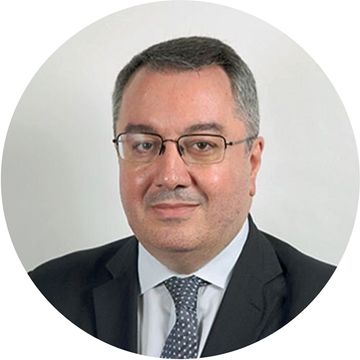
Professor Elias Mossialos

Professor of Health Policy, LSE

NCDs | Sustainable Financing

Dr Tomislav Sokol

MEP (EPP, Croatia), Member of the European Parliament Committee on Public Health (SANT)

NCDs | Sustainable Financing

Professor Kostas Athanasakis

Assistant Professor of Health Economics and Health Technology Assessment, University of West Attica

NCDs | Sustainable Financing

Stine Bosse

MEP (Renew Europe, Denmark), Vice-Chair of the European Parliament’s Committee on Public Health (SANT), Substitute Member in the Committee on Budgets (BUDG)

Sustainable Financing

Jean-Marc Bourez

CEO, European Institute of Innovation and Technology (EIT) Health

 NCDs 

Anne Bucher 

Non-Residential Fellow, Bruegel

Sustainable Financing

Antonella Cardone

CEO, Cancer Patients Europe

Sustainable Financing

Joe de Cock

Former CEO, Belgian National Institute of Health and Disability Insurance (NIHDI)         

Sustainable Financing

Dr Oxana Domenti

World Health Organization (WHO) Representative to the European Union

NCDs

Dr Josep Figueras

Director, European Observatory on Health Systems and Policies

NCDs

Dr Maja Fjaestad

Adjunct Professor, Senior Advisor, the Stockholm School of Economics

Sustainable Financing

Dr Paul Garassus

President, European Union of Private Hospitals (UEHP)           

NCDs

Philip Haywood

Former Policy Analyst, Health System Resilience, Organisation for Economic Co-operation and Development (OECD)

NCDs

Ernst van Koesveld

Consultant ABDTOPConsult, Ministry of the Interior and Kingdom Relations of the Netherlands

Sustainable Financing
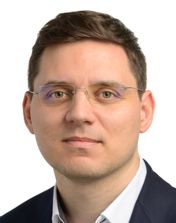
Victor Negrescu

Vice-President of the European Parliament (S&D, Romania), Member of the European Parliament’s Committee on Public Health (SANT), Member of the Committee on Budgets (BUDG)

Former member of the Expert Advisory Group and sustainable healthcare financing report co-author

Susana Palkonen

Director, European Federation of Allergy and Airways Diseases Patients’ Association (EFA)

NCDs

Dimitra Panteli

Programme Manager, European Observatory on Health Systems and Policies

Sustainable Financing

Dr Andrzej Rys

Principal Scientific Adviser, Directorate-General for Health and Food Safety (DG SANTE), European Commission 

NCDs

Anca Toma

Executive Director, European Patients' Forum 

Sustainable Financing

Professor Raymond Vanholder

President, European Kidney Health Alliance (EKHA), Chair, European Chronic Disease Alliance (ECDA)

NCDs

Ane Fullaondo Zabala

Board Member, EUREGHA

Sustainable Financing

The Center for Asia-Pacific Resilience and Innovation (CAPRI)

The Center for Asia-Pacific Resilience and Innovation (CAPRI) is the Asia-Pacific Hub of the PHSSR. CAPRI was established in 2022 in Taipei to enhance global resilience and promote innovative governance by drawing on the experience of the Asia-Pacific region through comparative public policy research. As a nongovernmental, nonpartisan, international organisation, CAPRI’s current work focuses on meeting challenges to resilience at the intersection of health, economic growth, technology, and environmental sustainability, particularly in the high-income societies. Building on PHSSR’s research since 2021, CAPRI coordinates research on the sustainability and resilience of health systems in the Asia-Pacific region. 

The Central, Eastern Europe and the Baltics (CEEBA) Health Policy Network

In its pilot phase, the PHSSR undertook rapid health system reviews in eight countries, including Poland – one of the countries in the Central, Eastern Europe and the Baltics (CEEBA) region. The CEEBA Health Policy Network aims to build on the positive outcomes of this country research, by creating a platform to address unmet needs across the region, facilitate high-level policy dialogues and share best practice. By creating a regional forum, the CEEBA Health Policy Network aims to accelerate public debate on health system sustainability and resilience and contribute to the PHSSR goals.